
Stability Testing for Softgel Capsules
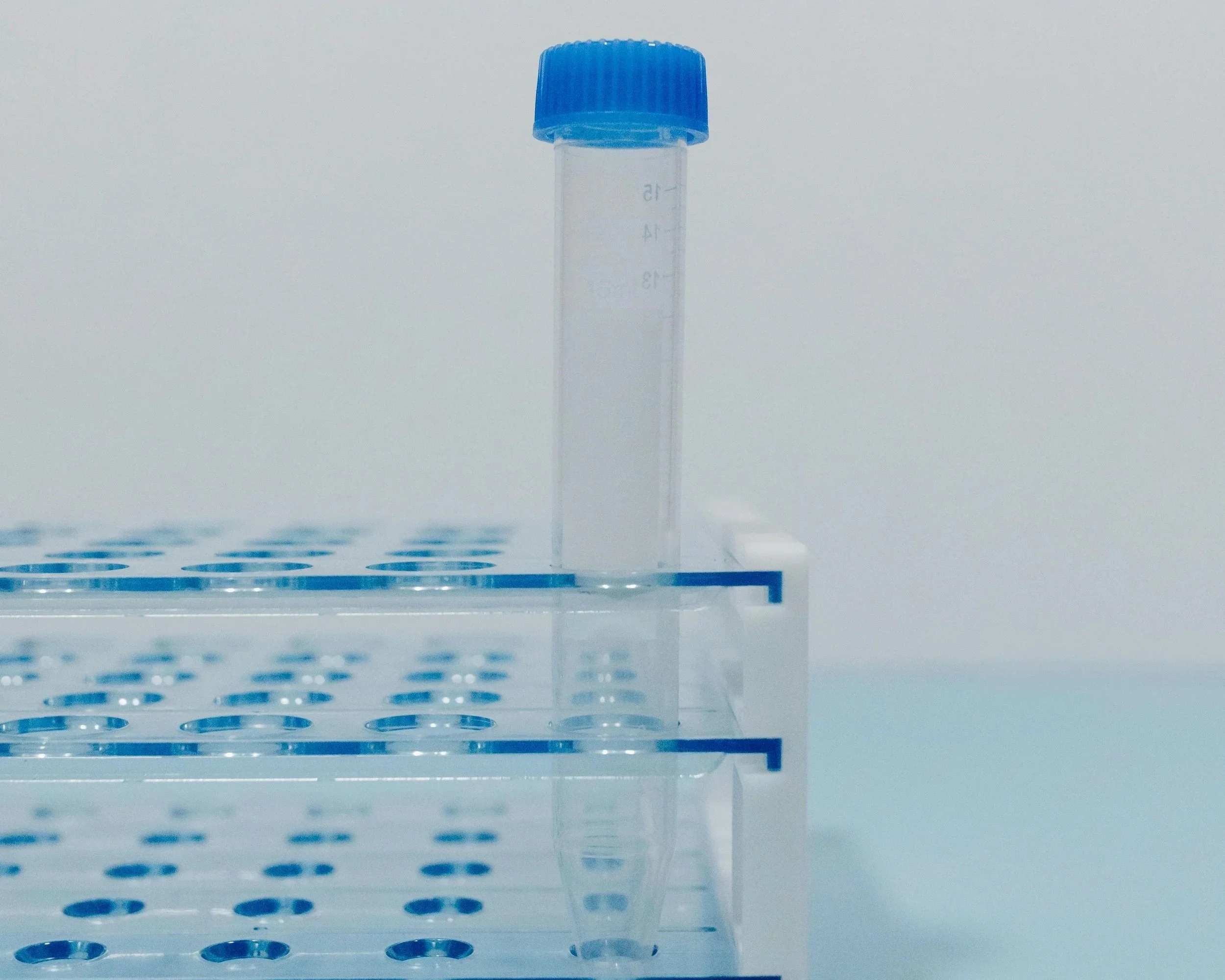
Drug product stability testing is not exactly glamorous work. It is slow, methodical, and expensive, and when it fails, it tends to fail late, after months of effort. For softgel capsules specifically, the stakes are higher than most anticipate.
This article covers what makes softgel stability testing distinct from other oral solid dosage forms, what the critical failure modes are, and how to build a testing strategy that catches problems early rather than discovering them at month 18.
Why Standard Stability Protocols Fall Short for Softgels
Most stability guidance treats oral solid dosage forms as a single category. In practice, a softgel capsule has a few things in common with a tablet from a stability standpoint. As opposed to tablets, softgels are a dynamic system: the shell and the fill are in continuous contact and exchange with each other throughout shelf life.
Three systems interact simultaneously: the capsule fill, the capsule shell, and the ambient air.
A change in any one of them can propagate into the others. For instance, a moisture migration into the fill may cause crystallization of the drug substance, while a plasticizer that migrates into a hydrophilic fill changes the shell's mechanical properties. Moreover, chemical reactions between fill and shell excipients (even slowly) may alter the dissolution performance of the entire capsule.
This is why a stability program for softgels requires a more granular understanding of what you are actually testing, and why.
Want to build a stability program that actually reflects how softgels behave? Our online course covers shell-fill interaction, plasticizer dynamics, and long-term formulation risk based on real manufacturing and development experience.
The Three Root Causes of Failure during Stability Studies
The typical issues observed during stability testing of softgels can be physical or chemical instabilities and incompatibilities.
Physical instability is the most visible. Softgels are prone to hardening, brittleness, leakage, and shell deformation over time. Hardness or brittleness usually points to plasticizer loss or redistribution; glycerol or sorbitol migrating out of the shell, often driven by fill formulation chemistry. Leakage, by contrast, is a seam integrity issue that may occur both immediately after manufacture and late during stability, and may have different root causes. Both require assessment of appearance, shell weight, and hardness testing at every stability time point.
Chemical instabilities involve the degradation of the API itself. Oxidation is often observed in lipid and lipophilic ingredients such as omega-3s, vitamin A, and vitamin D derivatives. When formulated correctly, softgels can offer an oxygen barrier on their own that prevents oxidation.
How Gelatin Crosslinking Causes Dissolution Failure
Incompatibilities: Of all the failure modes in softgel stability, gelatin crosslinking is the most insidious. It does not announce itself immediately. Capsules affected by cross-linking can look, feel, and smell completely normal, and then fail to dissolve.
Crosslinking occurs when gelatin protein chains form additional covalent bonds, typically driven by aldehydes. The sources of those aldehydes are numerous: oxidized excipients in the fill, impurities, peroxides, or even the API itself under certain degradation pathways. The result is a shell that becomes progressively more resistant to enzymatic digestion and hydrolysis. In dissolution testing, this manifests as slow, incomplete, or variable drug release, even when the API itself is stable.
Regulatory agencies and pharmacopeias are aware of this, and the testing response is now well-established. The USP general chapter <711> and its companion <2040> foresees a two-tier dissolution testing method. In it, if crosslinking is observed, pepsin or pancreatin can be added in a second tier of the test. However, authorities may not accept this approach without reserve, and further data may need to be provided in support of the unaffected performance of a crosslinked capsule.
In addition, the appearance of crosslinking at accelerated conditions does not always mean it will also occur during storage at 25°C/60% RH.
Struggling to get ahead of crosslinking before it shows up in dissolution? Our online course covers root causes, detection strategies, and how to design your stability protocol to catch problems at month one, not month twelve.
What a Robust Softgel Stability Protocol Actually Contains
A stability program for softgels should systematically address the following attributes:
Appearance and physical properties: visual assessment (color, shape, surface defects), hardness, shell weight, and fill weight.
Dissolution: using the two-tier enzyme protocol where gelatin cross-linking is a plausible risk, which, in practice, is almost always.
Assay and degradation products: HPLC-based quantitation of the API and any known or specified impurities, with particular attention to oxidation products in lipid-based fills.
Water content: water content analysis of at least the capsule shell at each time point. For some products, the shell-fill moisture equilibrium can shift during stability, and tracking it explains a significant proportion of physical changes.
Microbiological quality: In contrast to the common belief, softgels are not at increased risk of microbiological growth. The risk may originate from capsule fill components of natural origin that are not controlled sufficiently, and is relevant for water activity above 0.7. Still, this is a regulatory requirement and should be included in ICH stability programs.
Is the Accelerated Stability Data of Softgel Capsules Indicative of Long-Term Conditions?
For chemical degradation, the Arrhenius principle applies reasonably well, and accelerated data can support extrapolation to long-term conditions. For physical parameters related to the capsule shell, such as hardness, appearance, dissolution, and disintegration, accelerated conditions are often overdiscriminating, and results at 40°C/75% RH may not reflect the performance at 25°C/60% RH. A particular risk specific to softgels is the physical state of the fill: a semi-solid or lipid-based fill that melts at 40°C introduces a change of state that would not occur under real storage conditions, and fundamentally alters the fill-shell interaction. On the upside, though, if the product passes 6 months at accelerated conditions, it is likely to remain stable for 24 months at long-term conditions.
Why Softgel Packaging Selection Belongs in Your Stability Strategy
The choice of packaging material for softgel capsules should be made based on one primary parameter: water vapor transmission rate. The capsule shell is sensitive to both moisture uptake and moisture loss, and the packaging needs to control the humidity environment around the capsule over the full shelf life.
Oxygen barrier is typically a secondary consideration for most softgel products. The gelatin shell itself provides an oxygen barrier, which means the incremental benefit of a high barrier foil is relevant only for highly oxidation-sensitive fills. For the majority of products, a well-specified blister or HDPE bottle with adequate WVTR is sufficient.
One practical rule that is often overlooked: desiccants should not be used in bottles for softgel capsules. Desiccants draw moisture not just from the headspace but from the shells of the capsules too, leading to brittleness and even leakage over time.
Our online softgel course is now live!
After years of requests, we've packaged our expertise into comprehensive training courses:
+ Practical formulation knowledge based on 15+ years of experience
+ Solutions to common quality issues like leakage and crosslinking
+ Available on-demand access—learn whenever and wherever you want
FAQs: Stability Testing
-
Softgels are a dynamic system rather than a static dosage form. Three systems — the capsule fill, the capsule shell, and the ambient air — are in continuous contact and exchange with each other throughout shelf life, and a change in any one of them can propagate into the others. Moisture migration into the fill can cause crystallisation of the drug substance; plasticiser migrating into a hydrophilic fill changes the shell's mechanical properties; and slow chemical reactions between fill and shell excipients can alter dissolution performance. Standard stability protocols designed for tablets don't account for any of this.
-
Failures fall into three categories: physical instability, chemical instability, and incompatibility. Physical instability is the most visible- hardening, brittleness, leakage, and shell deformation, usually driven by plasticiser loss or redistribution, or by seam integrity issues. Chemical instability involves degradation of the API itself. Incompatibility most often manifests as gelatin crosslinking, which is the most insidious of the three because it doesn't announce itself visually.
-
Crosslinking occurs when gelatin protein chains form additional covalent bonds, typically driven by aldehydes. The sources are numerous: oxidised excipients in the fill, impurities, peroxides, or even the API itself under certain degradation pathways. Affected capsules can look, feel, and smell completely normal and then fail dissolution, because the shell becomes progressively more resistant to enzymatic digestion and hydrolysis. USP <711> and its companion <2040> address this through a two-tier dissolution method, where pepsin or pancreatin can be added in a second tier if crosslinking is observed — though regulators may not accept this approach without additional supporting data, and crosslinking at accelerated conditions doesn't always mean it will occur at 25°C/60% RH.
-
At minimum: appearance and physical properties (visual assessment, hardness, shell weight, fill weight); dissolution using the two-tier enzyme protocol wherever crosslinking is a plausible risk, which in practice is almost always; assay and degradation products by HPLC, with particular attention to oxidation products in lipid-based fills; water content of at least the capsule shell at each time point, since shell–fill moisture equilibrium can shift during stability and explains a significant proportion of physical changes; and microbiological quality, which is a regulatory requirement under ICH but practically relevant only where water activity exceeds 0.7 and fill components of natural origin aren't sufficiently controlled.
-
Yes, and the primary selection parameter is water vapour transmission rate, because the shell is sensitive to both moisture uptake and moisture loss across shelf life. Oxygen barrier is usually a secondary consideration, since the gelatin shell itself acts as an oxygen barrier — high-barrier foils are only really worth the cost for highly oxidation-sensitive fills. One practical rule that's often overlooked: desiccants should not be used in bottles for softgel capsules, because they draw moisture not just from the headspace but from the shells themselves, leading to brittleness and leakage over time.